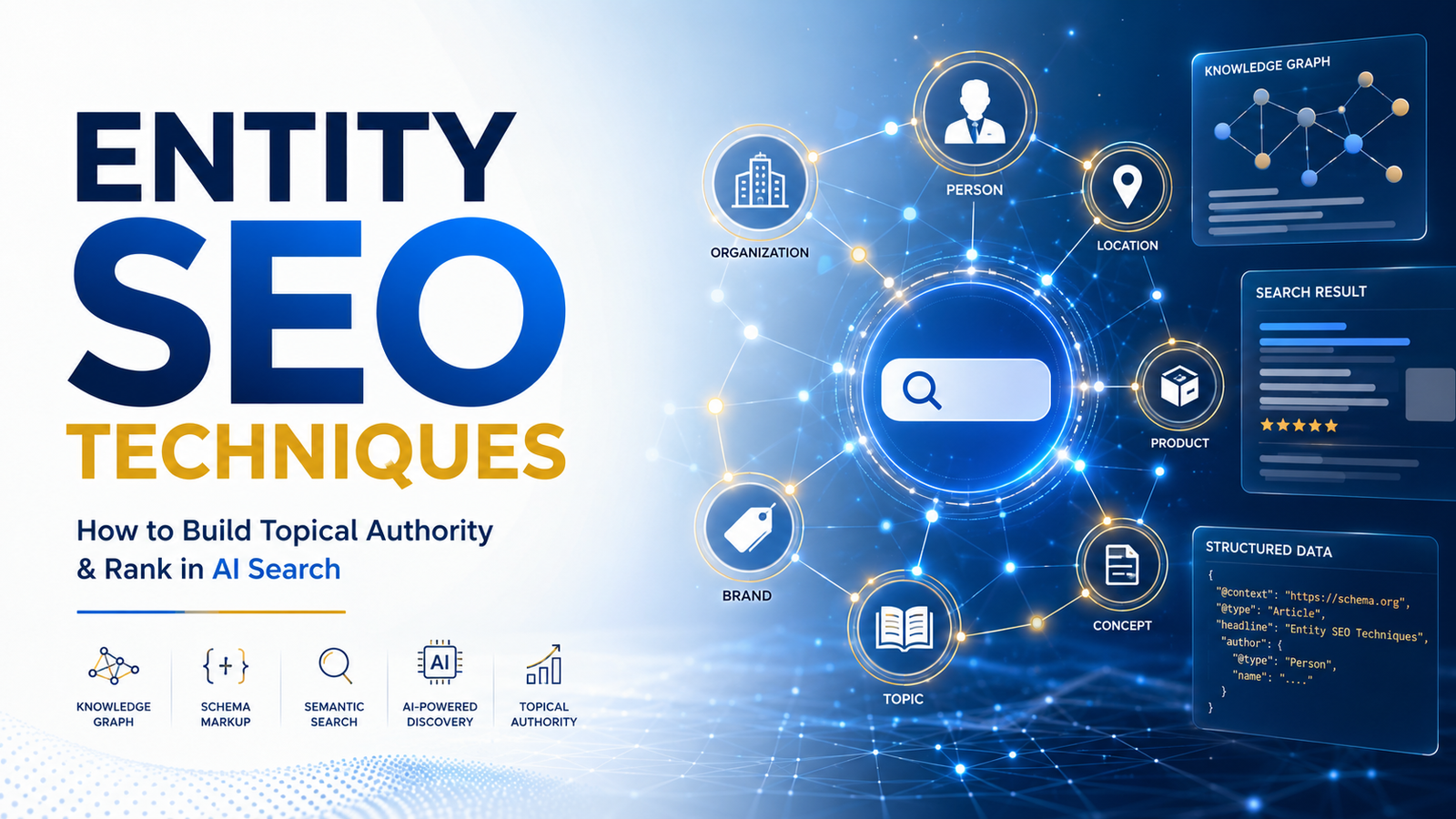
Entity SEO Techniques have become one of the most important aspects of modern search engine optimization. Google’s algorithms have evolved beyond simply matching keywords. Today, the search engine tries to understand people, places, organizations, products, and concepts—collectively known as entities. This shift toward semantic search means websites that clearly define relationships between topics often perform better than websites that rely only on keyword optimization.
Implementing Entity SEO Techniques helps Google build confidence in your website’s expertise. Instead of treating each page as an isolated document, Google connects related information across your website and compares it with trusted sources across the web. The result is better topical authority, improved search visibility, and greater opportunities to appear in rich results and AI-powered search experiences.
If you’re looking for professional SEO guidance, visit Alvin John Ferias or explore the available SEO services to build a stronger organic search strategy.
For Google’s official SEO documentation, refer to Google Search Central.
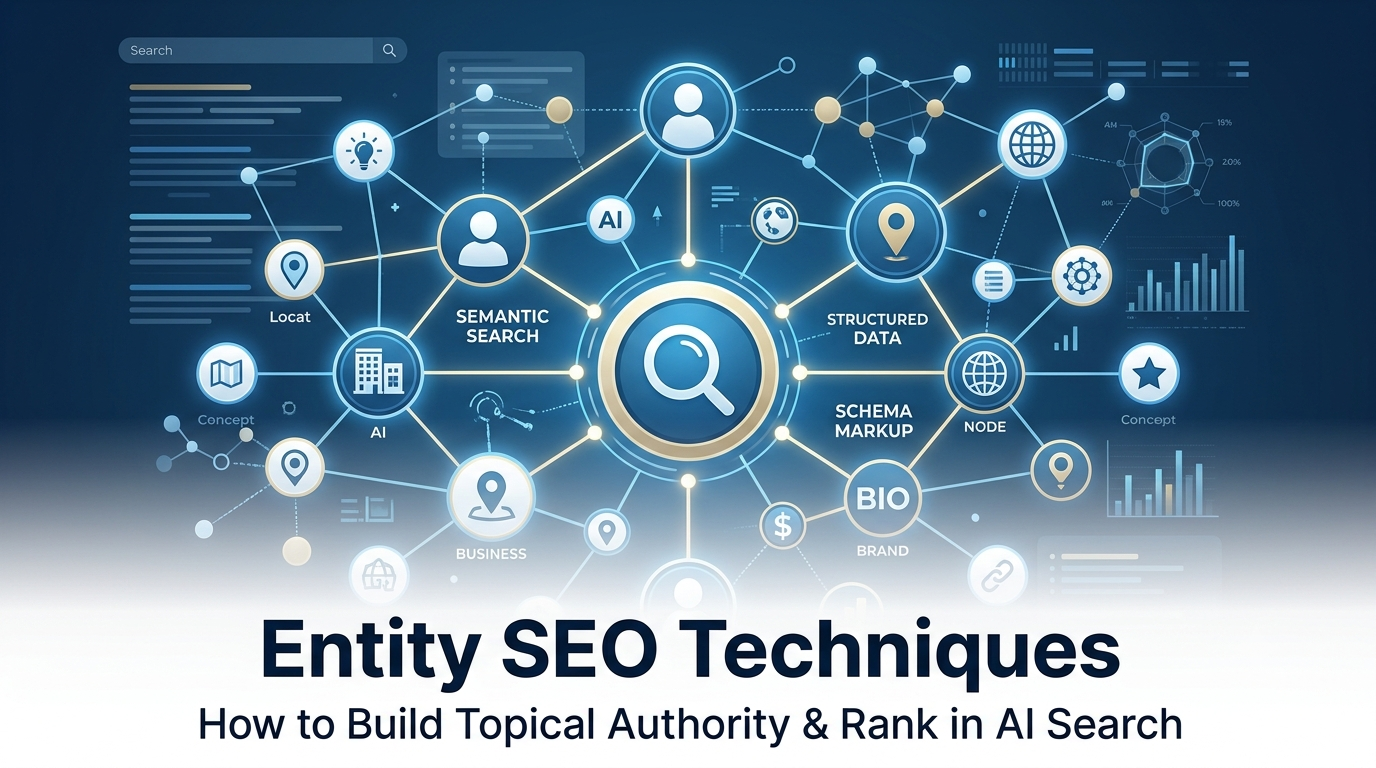
1. Entity SEO Techniques Begin with Building Topical Authority
One of the biggest misconceptions in SEO is that publishing more articles automatically improves rankings. In reality, Google rewards websites that demonstrate expertise around a specific subject. That’s where Entity SEO Techniques become valuable.
Instead of writing disconnected blog posts, organize your content around core topics. For example, if your website focuses on SEO, create supporting content about technical SEO, on-page SEO, local SEO, content optimization, schema markup, Core Web Vitals, and keyword research. These interconnected pages help search engines understand that your website covers the topic comprehensively.
Internal linking plays an important role in this process. When related articles naturally link to one another, they reinforce semantic relationships and distribute authority throughout your website. A well-structured content hub also makes it easier for visitors to navigate and discover relevant information.
If you’re planning a long-term SEO strategy, consider working with an experienced consultant through Alvin John Ferias to develop content clusters that strengthen topical authority.
2. Entity SEO Techniques Use Structured Data to Clarify Website Information
Search engines can infer meaning from content, but structured data makes that process much easier. One of the most effective Entity SEO Techniques is implementing Schema.org markup to identify your organization, services, articles, products, FAQs, and other content types.
Structured data helps Google understand who you are, what your business does, and how different pieces of information relate to one another. While schema markup is not a direct ranking factor, it can improve eligibility for rich results, enhance search appearance, and provide stronger context for semantic understanding.
Businesses should consider implementing Organization, Local Business, Breadcrumb, Article, FAQ, and Person schema where appropriate. These structured data types strengthen your website’s entity relationships and improve machine readability.
Learn more about schema markup from the official Schema.org documentation and Google’s guide to Structured Data.
3. Entity SEO Techniques Strengthen Internal Linking Across Related Topics
Internal links do much more than help visitors navigate your website. They also provide contextual signals that reinforce entity relationships. Effective Entity SEO Techniques use descriptive anchor text and logical site architecture to connect relevant pages.
For example, a blog post about technical SEO should naturally link to related resources on website performance, Core Web Vitals, schema markup, and SEO audits. This interconnected structure helps Google understand that these topics belong within the same knowledge area.
Avoid creating orphan pages that have little or no connection to the rest of your website. Every important page should be linked from relevant content, allowing authority to flow naturally throughout your site.
If you’re developing a content strategy, explore the professional SEO services available to improve your website’s architecture and internal linking strategy.
4. Entity SEO Techniques Improve Content Through Semantic Relevance
Modern SEO is no longer about repeating the same keyword dozens of times. Instead, Entity SEO Techniques focus on semantic relevance by naturally covering related concepts, terminology, and user questions.
For example, an article about technical SEO should also discuss crawling, indexing, XML sitemaps, robots.txt, canonical tags, page speed, structured data, and Core Web Vitals. These related concepts help Google understand the broader topic and improve topical completeness.
Writing comprehensive content also improves the user experience. Readers are more likely to stay on your page, explore additional resources, and view your website as a trustworthy source of information.
Google’s helpful content guidance explains the importance of creating content for people rather than search engines. Read more at Google Search Essentials.
5. Entity SEO Techniques Benefit from Consistent Brand Signals
Google evaluates consistency across the web when identifying businesses and individuals as entities. Your business name, website, author profile, social media accounts, and citations should all present consistent information.
A complete author profile with professional credentials, experience, and links to relevant work strengthens trust. Likewise, maintaining consistent business information across directories and platforms helps reinforce your organization’s identity.
This consistency supports Google’s understanding of your website and contributes to stronger E-E-A-T (Experience, Expertise, Authoritativeness, and Trustworthiness) signals.
If you’re building your online presence, Alvin John Ferias offers services that can help align your website with current SEO best practices while supporting long-term organic growth.