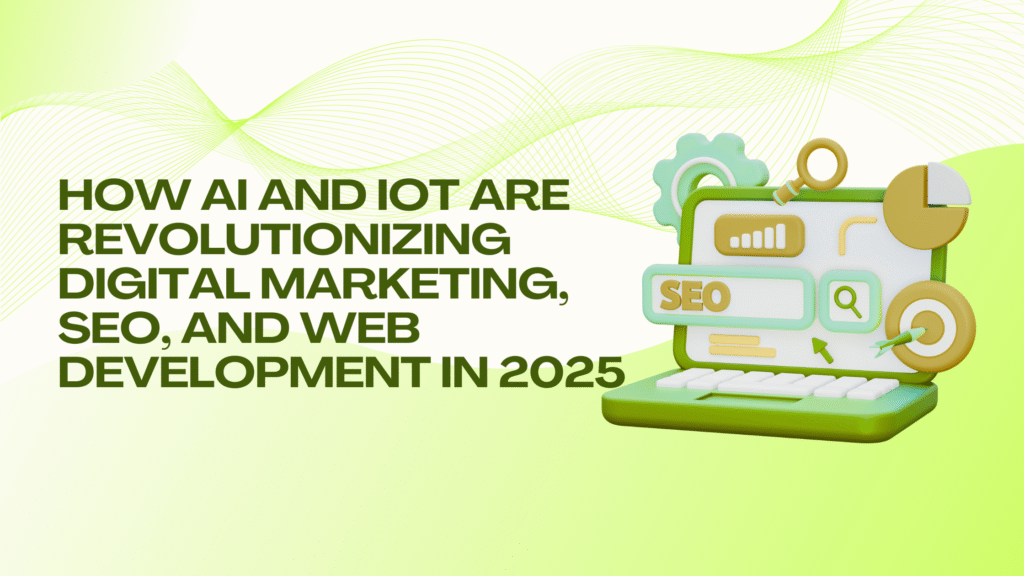
Digital marketing, SEO, and web development are evolving faster than ever. With artificial intelligence (AI) and the Internet of Things (IoT) taking center stage, businesses now have the tools to personalize marketing, automate processes, and predict trends like never before.
If you’re wondering how AI and IoT can elevate your digital strategies, this comprehensive guide will walk you through every detail—from AI-powered SEO tools to IoT-driven marketing insights and smart web development.
Introduction
Gone are the days when digital marketing was just about posting on social media or building a simple website. In 2025, the landscape is dominated by AI-driven analytics, machine learning algorithms, and IoT-connected devices.
Businesses now rely on intelligent tools to understand customer behavior, optimize websites for search engines, and deliver personalized content in real-time. This article explores how AI and IoT are reshaping SEO, digital marketing, and web development, and how you can leverage these technologies to stay ahead of the competition.
Understanding AI and IoT
What is Artificial Intelligence (AI)?
Artificial intelligence is the simulation of human intelligence in machines. From predicting customer behavior to automating content creation, AI can analyze massive amounts of data in seconds, helping businesses make smarter decisions.
Examples:
-
Chatbots answering customer queries.
-
AI tools predicting trending keywords for content.
-
Automated social media post scheduling.
What is the Internet of Things (IoT)?
IoT refers to interconnected devices that collect and exchange data over the internet. Think smart home devices, wearable fitness trackers, or sensors in retail stores—they all generate actionable insights.
Examples:
-
Smart refrigerators suggesting grocery purchases.
-
Wearable devices tracking user health for personalized campaigns.
-
Connected sensors analyzing store foot traffic for marketing insights.
How AI and IoT Work Together
When AI meets IoT, data collected by devices can be analyzed to predict trends, personalize marketing campaigns, and improve website functionality. For example, wearable fitness trackers send real-time data to AI systems, which can then deliver targeted health content or product recommendations.
AI in Digital Marketing
AI-Powered SEO Tools
AI tools like SurferSEO, SEMrush, and Ahrefs use machine learning to identify trending keywords, optimize content, and predict search intent. This means your website can stay ahead in search rankings without spending hours manually analyzing data.
AI for Content Creation
From blog posts to ad copy, AI can generate relevant, optimized content. Tools like ChatGPT, Jasper, and Writesonic allow marketers to quickly produce high-quality content tailored to their audience.
AI in Social Media Marketing
AI can schedule posts at optimal times, analyze engagement metrics, and even suggest the best type of content to post. For example, Instagram and TikTok algorithms now heavily rely on AI to determine which posts reach users.
Chatbots and Customer Experience
AI chatbots provide 24/7 customer support, answer queries, and even guide visitors through product selection. They improve user experience while generating valuable insights for marketing campaigns.
IoT in Digital Marketing
Personalized Marketing through IoT Devices
IoT devices like smart speakers, fitness trackers, and connected home appliances allow businesses to deliver highly personalized marketing messages. Imagine sending a customized ad for running shoes to users whose wearable devices track jogging activity.
Location-Based Marketing
IoT enables proximity marketing through devices like beacons and GPS tracking. Businesses can push targeted promotions when customers are near physical stores, improving conversion rates.
Real-Time Consumer Insights
IoT sensors collect data on how consumers interact with products in real-time. These insights help businesses tweak marketing strategies instantly, improving engagement and ROI.
AI and IoT in SEO
Predictive Analytics for Keyword Strategy
AI analyzes search trends and predicts the most effective keywords to target, helping content creators stay ahead of competitors.
Voice Search Optimization
With the rise of smart assistants like Alexa, Google Home, and Siri, IoT devices have made voice search a critical factor in SEO. Businesses must optimize for natural language queries and conversational keywords.
Automated SEO Audits and Fixes
AI-powered SEO tools monitor website health, detect broken links, analyze meta tags, and suggest fixes automatically, saving time and improving performance.
AI and IoT in Web Development
AI-Assisted Web Design
AI tools like Wix ADI or Bookmark can generate layout suggestions, color palettes, and UX improvements automatically, helping designers create websites faster and smarter.
Code Generation with AI
AI can assist developers by writing code snippets, detecting bugs, and even automating repetitive tasks, reducing development time and human error.
IoT-Connected Websites
Websites integrated with IoT devices can provide real-time data dashboards, smart notifications, and dynamic user experiences, giving businesses a tech-savvy edge.
Benefits of Integrating AI and IoT
-
Enhanced Personalization – AI analyzes IoT data to deliver tailored content and offers.
-
Efficiency and Productivity – Automation reduces manual work in marketing, SEO, and web development.
-
Data-Driven Decisions – Predictive analytics allow businesses to act proactively.
-
Competitive Advantage – Early adopters of AI and IoT outperform competitors with smarter strategies.
Challenges and Considerations
-
Data Privacy and Security – IoT devices collect sensitive information, which must be protected.
-
Integration Costs – Implementing AI and IoT requires investment in software, hardware, and training.
-
Human Oversight – AI can’t replace human judgment, balance automation with strategic thinking.
Future Trends in 2025 and Beyond
-
5G Connectivity – Faster, low-latency networks enable seamless IoT operations.
-
Hyper-Personalization – AI will deliver one-to-one marketing experiences at scale.
-
Automated SEO Pipelines – Full automation in content optimization, link building, and technical SEO.
-
Smart Web Development – Adaptive, AI-powered websites that respond dynamically to user behavior.
Actionable Tips for Businesses
-
Start Small with AI Tools – Use AI for content creation, SEO audits, or chatbot automation.
-
Adopt IoT Gradually – Integrate wearable devices or sensors to collect meaningful consumer data.
-
Leverage Predictive Analytics – Use AI insights to forecast trends and optimize campaigns.
-
Ensure Security Compliance – Always follow privacy guidelines when collecting IoT data.
-
Invest in AI-Assisted Web Design – Save time and improve UX with AI-driven web tools.
Conclusion
AI and IoT are no longer futuristic concepts—they are here, shaping digital marketing, SEO, and web development in 2025. Businesses that leverage these technologies can deliver hyper-personalized experiences, automate processes, and make data-driven decisions that boost performance.
Embracing AI and IoT isn’t just an option—it’s a necessity for staying competitive in the modern digital landscape. Start integrating these technologies today to transform your digital strategy and maximize growth.
FAQs
1. How can AI improve my SEO strategy?
AI predicts search trends, suggests keywords, and automates technical SEO audits.
2. Can small businesses afford IoT-based marketing?
Yes, starting with affordable smart devices or sensors can provide valuable insights without huge costs.
3. Which AI tools are best for content creation?
Tools like ChatGPT, Jasper, and Writesonic are effective for blogs, social media posts, and ad copy.
4. Is IoT data secure for marketing purposes?
Security depends on device setup and compliance with privacy standards—always use secure platforms.
5. How soon will AI automate most web development tasks?
Many coding and design tasks are already AI-assisted, and full automation is expected to become mainstream within the next 3–5 years.