Alvin John Ferias

10 Entity SEO Techniques That Help Google Understand Your Website

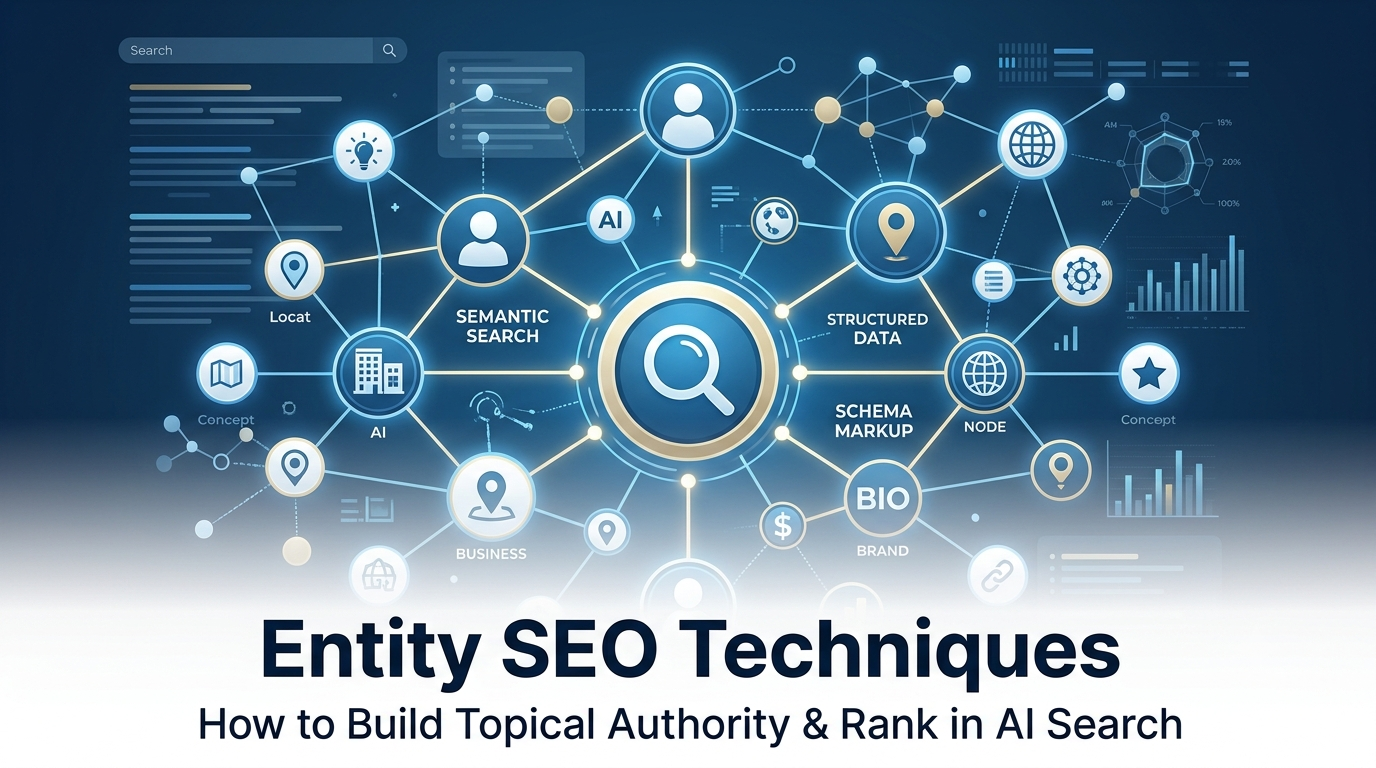
Entity SEO Techniques

Entity SEO Techniques have become one of the most important aspects of modern search engine optimization. Google’s algorithms have evolved beyond simply matching keywords. Today, the search engine tries to understand people, places, organizations, products, and concepts—collectively known as entities. This shift toward semantic search means websites that clearly define relationships between topics often perform better than websites that rely only on keyword optimization.

Implementing Entity SEO Techniques helps Google build confidence in your website’s expertise. Instead of treating each page as an isolated document, Google connects related information across your website and compares it with trusted sources across the web. The result is better topical authority, improved search visibility, and greater opportunities to appear in rich results and AI-powered search experiences.

If you’re looking for professional SEO guidance, visit Alvin John Ferias or explore the available SEO services to build a stronger organic search strategy.

For Google’s official SEO documentation, refer to Google Search Central.
Entity SEO Techniques

1. Entity SEO Techniques Begin with Building Topical Authority

One of the biggest misconceptions in SEO is that publishing more articles automatically improves rankings. In reality, Google rewards websites that demonstrate expertise around a specific subject. That’s where Entity SEO Techniques become valuable.

Instead of writing disconnected blog posts, organize your content around core topics. For example, if your website focuses on SEO, create supporting content about technical SEO, on-page SEO, local SEO, content optimization, schema markup, Core Web Vitals, and keyword research. These interconnected pages help search engines understand that your website covers the topic comprehensively.

Internal linking plays an important role in this process. When related articles naturally link to one another, they reinforce semantic relationships and distribute authority throughout your website. A well-structured content hub also makes it easier for visitors to navigate and discover relevant information.

If you’re planning a long-term SEO strategy, consider working with an experienced consultant through Alvin John Ferias to develop content clusters that strengthen topical authority.

2. Entity SEO Techniques Use Structured Data to Clarify Website Information

Search engines can infer meaning from content, but structured data makes that process much easier. One of the most effective Entity SEO Techniques is implementing Schema.org markup to identify your organization, services, articles, products, FAQs, and other content types.

Structured data helps Google understand who you are, what your business does, and how different pieces of information relate to one another. While schema markup is not a direct ranking factor, it can improve eligibility for rich results, enhance search appearance, and provide stronger context for semantic understanding.

Businesses should consider implementing Organization, Local Business, Breadcrumb, Article, FAQ, and Person schema where appropriate. These structured data types strengthen your website’s entity relationships and improve machine readability.

Learn more about schema markup from the official Schema.org documentation and Google’s guide to Structured Data.

3. Entity SEO Techniques Strengthen Internal Linking Across Related Topics

Internal links do much more than help visitors navigate your website. They also provide contextual signals that reinforce entity relationships. Effective Entity SEO Techniques use descriptive anchor text and logical site architecture to connect relevant pages.

For example, a blog post about technical SEO should naturally link to related resources on website performance, Core Web Vitals, schema markup, and SEO audits. This interconnected structure helps Google understand that these topics belong within the same knowledge area.

Avoid creating orphan pages that have little or no connection to the rest of your website. Every important page should be linked from relevant content, allowing authority to flow naturally throughout your site.

If you’re developing a content strategy, explore the professional SEO services available to improve your website’s architecture and internal linking strategy.

4. Entity SEO Techniques Improve Content Through Semantic Relevance

Modern SEO is no longer about repeating the same keyword dozens of times. Instead, Entity SEO Techniques focus on semantic relevance by naturally covering related concepts, terminology, and user questions.

For example, an article about technical SEO should also discuss crawling, indexing, XML sitemaps, robots.txt, canonical tags, page speed, structured data, and Core Web Vitals. These related concepts help Google understand the broader topic and improve topical completeness.

Writing comprehensive content also improves the user experience. Readers are more likely to stay on your page, explore additional resources, and view your website as a trustworthy source of information.

Google’s helpful content guidance explains the importance of creating content for people rather than search engines. Read more at Google Search Essentials.

5. Entity SEO Techniques Benefit from Consistent Brand Signals

Google evaluates consistency across the web when identifying businesses and individuals as entities. Your business name, website, author profile, social media accounts, and citations should all present consistent information.

A complete author profile with professional credentials, experience, and links to relevant work strengthens trust. Likewise, maintaining consistent business information across directories and platforms helps reinforce your organization’s identity.

This consistency supports Google’s understanding of your website and contributes to stronger E-E-A-T (Experience, Expertise, Authoritativeness, and Trustworthiness) signals.

If you’re building your online presence, Alvin John Ferias offers services that can help align your website with current SEO best practices while supporting long-term organic growth.
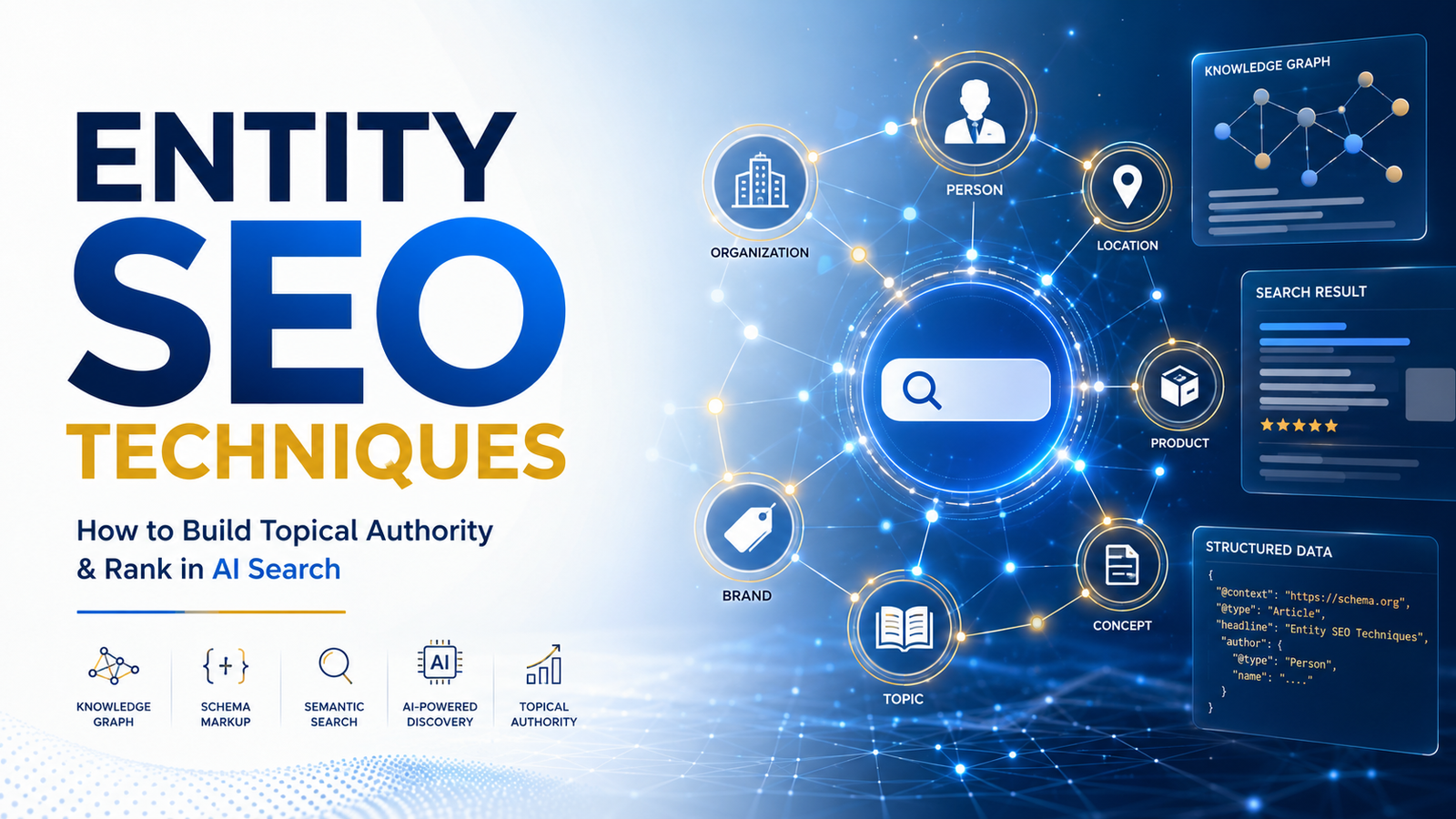

6. Entity SEO Techniques Improve Search Visibility Through E-E-A-T

One of the most valuable Entity SEO Techniques is strengthening your website’s Experience, Expertise, Authoritativeness, and Trustworthiness (E-E-A-T). While E-E-A-T is not a direct ranking factor, it plays a significant role in how Google evaluates content quality, especially for websites that provide professional advice or services.

Demonstrating expertise begins with publishing accurate, well-researched content written by qualified authors. Include author bios that showcase relevant experience, certifications, or industry knowledge whenever appropriate. Supporting your claims with reputable sources also increases credibility. Instead of making unsupported statements, reference official documentation, industry studies, or recognized organizations to reinforce your content.

Your website should also display clear contact information, privacy policies, service details, and business information. These elements build trust with both users and search engines. If your website offers SEO consulting or digital marketing services, ensure visitors can easily learn more through your service pages. For example, readers can explore the available SEO services or visit Alvin John Ferias to learn more about professional SEO solutions.

Google’s own documentation explains how creating people-first content contributes to long-term search success. You can review the official guidance at Google Search Essentials.

7. Entity SEO Techniques Support Better Content Clusters

A successful content strategy is no longer based on publishing isolated blog posts. Modern Entity SEO Techniques encourage the creation of content clusters that revolve around a central topic. This structure helps search engines recognize your website as an authoritative source within a specific niche.

For example, if your pillar page discusses Entity SEO, supporting articles could cover semantic search, schema markup, internal linking, knowledge graphs, topical authority, Google Search Console, and technical SEO audits. Each supporting article links back to the main pillar page while also connecting to related resources within the cluster.

This approach benefits both search engines and users. Visitors can easily discover related information without leaving your website, increasing engagement and reducing bounce rates. Search engines, meanwhile, gain a clearer understanding of how your content fits together, making it easier to evaluate topical relevance.

As your website grows, continue expanding your content clusters by answering common user questions and addressing emerging SEO trends. This ongoing development signals that your website remains active, helpful, and authoritative.

8. Entity SEO Techniques Enhance Technical SEO Performance

Technical SEO provides the foundation that allows Entity SEO Techniques to work effectively. Even the most informative content may struggle to rank if search engines encounter crawling or indexing issues.

Start by ensuring your website has a logical URL structure, a properly configured XML sitemap, and an optimized robots.txt file. Regularly monitor crawl errors using Google Search Console and resolve indexing issues promptly. Fast-loading pages, secure HTTPS connections, and mobile-friendly layouts also contribute to a better user experience and improved search performance.

Core Web Vitals remain an important consideration because they measure real-world user experience. Metrics such as Largest Contentful Paint (LCP), Interaction to Next Paint (INP), and Cumulative Layout Shift (CLS) provide insight into how users experience your website. You can evaluate your site’s performance using Google PageSpeed Insights.

Combining technical SEO with strong entity optimization creates a solid foundation for long-term organic growth. Search engines can crawl your content more efficiently, understand its context, and deliver it to users searching for relevant information.

9. Entity SEO Techniques Leverage Authoritative External References

One of the often-overlooked Entity SEO Techniques is citing trustworthy external resources. Linking to authoritative websites helps support your claims and provides additional value for readers who want to learn more. While external links do not automatically improve rankings, they demonstrate that your content is backed by reliable information rather than unsupported opinions.

When discussing SEO concepts, reference official sources whenever possible. Google’s documentation, Google Search Central, remains one of the most reliable resources for understanding search engine best practices. For structured data, Schema.org offers comprehensive documentation on supported schema types. Developers seeking accessibility or web standards guidance can also benefit from MDN Web Docs.

Balance external references with strategic internal links to keep readers engaged with your own content. For example, after explaining a technical concept, direct users to your related resources or service pages where they can explore implementation options. This creates a helpful user journey while reinforcing your website’s topical authority.

10. Entity SEO Techniques Require Ongoing Monitoring and Optimization

SEO is an ongoing process, and Entity SEO Techniques require continuous refinement as search behavior and algorithms evolve. Publishing a well-optimized article is only the beginning. Regular performance monitoring helps identify opportunities to improve rankings, update outdated information, and expand content based on new search trends.

Track key metrics such as organic traffic, keyword rankings, click-through rates, impressions, and user engagement using tools like Google Analytics and Google Search Console. These platforms provide valuable insights into how visitors find and interact with your content.

Periodic content updates are equally important. Refresh statistics, add new examples, improve internal linking, and expand sections that answer emerging user questions. Search engines favor content that remains accurate, relevant, and useful over time.

By treating SEO as a continuous improvement process rather than a one-time project, your website can maintain stronger rankings and adapt more effectively to changes in Google’s search ecosystem.

Conclusion

Implementing Entity SEO Techniques is one of the most effective ways to align your website with the future of search. As Google continues to rely on semantic understanding and entity-based indexing, businesses that organize content around topics instead of isolated keywords are better positioned to earn long-term visibility.

Building topical authority, implementing structured data, strengthening internal linking, improving technical SEO, and maintaining consistent brand signals all contribute to a website that search engines can understand with greater confidence. These practices also create a better experience for users by making content easier to discover and navigate.

If you’re ready to strengthen your website’s SEO foundation, visit Alvin John Ferias to learn more about modern optimization techniques, or explore the available SEO services for tailored solutions that support sustainable organic growth.

Frequently Asked Questions

1. What are Entity SEO Techniques?

Entity SEO Techniques are optimization methods that help search engines understand the people, organizations, products, places, and concepts mentioned throughout your website. They improve semantic understanding and strengthen topical authority.

2. Are Entity SEO Techniques different from traditional keyword SEO?

Yes. Traditional SEO focuses primarily on keywords, while Entity SEO Techniques emphasize relationships between topics, structured data, semantic relevance, and contextual understanding.

3. Does schema markup improve Entity SEO?

Schema markup helps search engines better interpret your content and understand important entities on your website. While it is not a direct ranking factor, it supports semantic search and eligibility for rich results.

4. How do internal links support Entity SEO?

Internal links connect related pages, reinforce topical relationships, distribute authority throughout your website, and help search engines understand your site’s content hierarchy.

5. Why is Entity SEO important for the future of search?

Search engines increasingly rely on artificial intelligence and semantic understanding instead of simple keyword matching. Implementing Entity SEO Techniques helps future-proof your website by aligning with how modern search engines interpret and rank content.

Share this post