
Every year ends with bold SEO predictions, and few people go back to check which ones came true. That’s what makes this 2026 SEO reality check from SEO Kwentuhan worth watching.
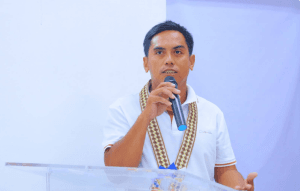
In this hour-long episode, Gab and Gelo look back at the biggest SEO changes of 2026. They separate industry hype from what actually worked, talk honestly about how AI changed their own work, and share predictions for 2027.
Below I summarize each part of the conversation with timestamps, so you can jump straight to it, plus my own take as an SEO specialist who has worked with Philippine and international clients for over 15 years.
Quick answer: The 2026 SEO reality check from SEO Kwentuhan says AI has not killed SEO; it changed the job. Ranking on Google still matters, but more as a ticket into AI answers than as a traffic driver. GEO became a real service clients ask for. Overpriced AI visibility tools and instant “GEO experts” were the biggest hype. Fundamentals, original data and real expertise still worked. And for 2027, the hosts expect technical SEO to matter even more, and AI assistant traffic to grow from about 5% to 10–20% of traffic for some clients.
1. Did AI finally kill SEO in 2026?
The short answer from both hosts: no. One host points out that people have been declaring SEO dead since around 2013, when the Penguin and Panda updates hit. Each time, the strategies changed, but the work continued. Today the shift is toward first-hand experience and expertise.
They also read out how well-known international SEOs see it:
- Rand Fishkin: “The SEO opportunity pie is shrinking.”
- Mike King: “SEO isn’t dead, it’s deprecated.”
- Lily Ray: strong SEO is still the foundation.
- John Mueller (Google): whatever you call it, AI is not going anywhere.
- Kevin Indig: traditional SEO remains foundational, but AI visibility demands different content strategies.
When asked how much “life” SEO has left, like a health bar in a game, one host says it’s actually growing. He sees more SEO job opportunities, not fewer, even though each role now comes with extra responsibilities. Businesses still want someone who cares about their strategy, something an AI agent alone doesn’t do.
The job title is changing, though. Instead of “SEO specialist,” it’s becoming a marketing specialist with experience in organic growth and visibility, covering SEO, AIO and GEO.
My take: I agree completely. The clients I work with in 2026 still need SEO, but they now expect me to cover Google, Maps, AI answers and their brand’s reputation together. If you want the data behind this, I wrote about it in Is SEO dead in 2027?
2. The most overhyped SEO trends of 2026
This is one of the most honest parts of the episode. The hosts list four things they felt were overhyped:
- Rebranding as an “AEO/GEO specialist.” One host admits he rode the hype himself and changed his job title. He doesn’t think it’s wrong, but points out that Google Search Central said in May 2026 that the foundation of AI search is still SEO: technical SEO, content and link building.
- Over-complicated vector embeddings. The theory behind semantic SEO and embeddings is useful, but the way it’s often explained makes SEO sound impossible for beginners. Most practitioners already do it without knowing the term.
- AI dashboards built on a single prompt. Tracking AI visibility with one fixed prompt doesn’t reflect reality. Results change every week and depend on the content you publish. There’s still no standard way to report it.
- Expensive AI visibility tools. Many launched at enterprise-level prices, gave unreliable data and later disappeared. One host also notes that AI answers differ by location: what shows in ChatGPT in the Philippines may not match what the tool reports, even with a VPN.
They also call out people and agencies who declared themselves “GEO experts” as early as the first wave of 2026 and sold GEO before they could deliver results in AI Overviews.
My take: My rule for clients is simple: if a tactic can’t be explained to the business owner in one sentence, it isn’t your first priority. Before paying for an AI visibility tool, run manual checks. Ask ChatGPT, Gemini, Perplexity and Google AI Mode 10–20 questions your customers ask, from your own location, and record who gets mentioned.
3. Did traditional Google rankings become less important?
Yes and no. The hosts describe how a 2026 results page looks: ads first, then the AI Overview, then the blue links, then more ads, plus local maps or videos depending on the query. Organic results have been pushed far down.
The effect shows up in Google Search Console. Impressions and average positions go up, but clicks go down. One host has seen clients lose around 50% of their clicks compared with the year before, while their rankings stayed the same. AI Overviews and AI Mode now answer most informational queries; the people who still click are usually ready to buy.
The key idea in this part: ranking has a new job. It is less a traffic driver and more a ticket into AI answers. Citing a Kevin Indig memo, one host explains that AI systems retrieve from roughly the top 10 to 20 results. He has seen client pages on page two of Google still get pulled into AI Overviews for “best [service] in [location]” searches.
If ranking used to be 100% of the goal, one host now puts it at about 60% ranking on Google and 40% getting picked up by AI after you rank.
The catch is attribution. A user may see your brand in an AI Overview or ChatGPT, remember it, and later type your name directly. That shows up as direct traffic, and you lose track of where it came from. When clients ask why traffic dropped but rankings didn’t, one host now answers with their conversion numbers instead.
My take: This is the conversation I have with almost every client now. Stop reporting rankings and traffic alone. Track calls, forms, Messenger and Viber clicks as key events in GA4, and watch engagement time on your money pages. My guide on why your website gets traffic but no leads covers the conversion side.
4. Did GEO become a real service or just a buzzword?
Both hosts agree that generative engine optimization became a real service in 2026, though one says it is still partly a buzzword.
Why it’s real: clients now ask for it by name. Some ask, “Do you already offer a GEO service?” and plan to add it to next month’s or next year’s budget. One host built a separate GEO package, because clients prefer a provider who names the service, even though the foundation (keyword research, content optimization, link building) is the same as SEO.
What the GEO work adds on top of SEO:
- Checking who already appears in AI answers for your topics, and what’s on their sites.
- Checking whether your brand is mentioned at all, and which competitors are.
- Measuring share of voice: what users and potential customers say about the business online.
- Building reputation on data aggregator and review sites that AI tools pull from, such as Yelp, AngelList, Clutch, Trustpilot and G2. For doctors, sites like RealSelf; for lawyers, industry-specific rating sites.
Why it’s still partly a buzzword: some agencies add GEO to their service list without knowing how to do it or track it. One host estimates GEO is still about 90% traditional SEO, with the remaining work coming from off-site reputation and external sources.
My take: In the Philippines, that off-site 10% often means your Google Business Profile reviews, Facebook page recommendations, and listings in local directories and industry associations. Clean those up first. If you want help, see my generative engine optimization services.
5. SEO strategies that still worked in 2026
The hosts share the strategies that surprised them by still working, for both SEO and GEO:
- The fundamentals. For smaller sites (under 100 pages), they still start with keywords, metadata and the most impactful technical SEO tasks each month.
- Self-serving listicles. “Best [solution] for [pain point]” articles that list your own brand alongside strong competitors. Placing your name next to well-known brands helps AI associate your entity with theirs. One host uses this especially for challenger brands that aren’t well known yet.
- Alternative listicles. “Best affordable alternatives to [big brand]” posts still work too.
- Numbers and original data. Titles and content with real statistics, and especially your own data sets. When most content is rehashed, original data “flies.”
- Real video embedded in articles. Guides that pair a blog post with a YouTube video you actually shot, with a real face, not a faceless AI video. The hosts even plan to turn their own episodes into blog posts for this reason.
My take: For Philippine businesses, “original data” can be simple: your real prices in pesos, a short survey of 50 customers, before-and-after project photos, or a breakdown of your most common customer questions from Messenger. And yes, embedding this very episode is a good example of the video tactic in action.
6. Did AI tools make SEO specialists more productive?
Very much so, and both hosts admit they now pay for a lot more tools than at the start of the year. What changed in 2026:
- Reporting: summarizing large data sets with AI, then double-checking the output. A task that took 2 hours now takes about 30 minutes.
- Content: AI helps from research to proofreading. You can build a “skill” that acts as a subject-matter expert, then add the client’s specific requirements.
- Visuals: AI image generation is finally usable for work. One host gives Claude a design system and an article, and asks for three infographic options.
- Video: tools like Higgsfield can create B-roll and faceless videos for a new YouTube channel.
The result: SEOs became more like generalists, handling everything from strategy to analysis.
One host also shares an experimental tip for hyper-specific niches like veterinary clinics: give the AI publicly available PDFs and e-books on the topic so it can pull extra references and points of view into the article. The warning: those sources may be outdated, so check them first or compare old data with new.
My take: The keyword in this section is “double-check.” AI makes good SEOs faster, but it also makes it easy to publish errors at scale. Always give AI clear context and guardrails about the business, and review every output before it goes live.
7. What SEO agencies got wrong about AI in 2026
Mistake 1: assuming a top-5 ranking means you’ll appear in AI answers. One host admits he made this mistake himself. Even big brands may not be cited, or may be cited with wrong information. In a recent GEO audit, he checked each product in different LLMs: was the pricing current, was the description correct, and where was the citation coming from (the website, a backlink, or an external source)? The answers varied. His lesson: keep your on-page information, social media posts and outreach content consistent and up to date.
Mistake 2: more content, same quality. The hosts discuss agencies replacing copywriters with AI and mass-producing articles. From what one host hears from agency owners, the smarter ones are instead resizing their teams and upskilling them. Writers become reviewers of AI output who know prompting, understand SEO fundamentals and remove “AI slop.” For clients with many articles, one host’s content mix shifted to 60% refreshed content and 40% new.
Mistake 3: taking on any client because “we have AI now.” One host turned down a moving company with many one-star reviews for broken items. SEO can’t fix a bad reputation when the product or service itself is the problem.
The hosts also talk about reviews. Fake reviews and IP tricks are out; they’ve moved to white-hat, long-term brand building. For a brand-new business, asking friends and family who have actually tried the product for a few honest reviews is a fair start. But in the long run, the product and service must be solid, because the truth will show up somewhere, if not on Google then on Reddit.
My take: I see the same with local businesses in the Philippines. The fastest way to grow reviews is still the simplest: send a short Google review link by SMS, Viber or Messenger right after the job is done.
8. Their biggest SEO learnings from 2026
This was the most valuable part of the episode for me. The lessons:
- Don’t rely on clicks and organic traffic as the main metric. KPIs given to clients are now conversion-focused, and strategies are data-driven, not “because the competitor is doing it.”
- Ranking 1–5 doesn’t guarantee AI visibility. Clients still need GEO as an upgraded level of traditional SEO.
- Start with pain points, but don’t skip top-of-funnel. One host now prioritizes pain-point content first, but still targets top-of-funnel topics to build topical authority. He disagrees with gurus who say to focus only on bottom-of-funnel content.
- There is no 100% correct rule for ranking in AIO and GEO. Keep testing.
- “We are replaceable.” AI can now do around 90% of the tasks, so an SEO who doesn’t understand the fundamentals and can’t defend their work to a client or employer can be replaced. It’s the client’s business, not ours. That’s why one host is now studying beyond SEO, including how to communicate clearly.
- Content must lead somewhere. Every article should connect to a product or service page and have calls to action. Otherwise you get rankings with high bounce rates and no business results.
- Be holistic. Social media, YouTube, share of voice and review aggregators are all connected to organic growth. It doesn’t end with titles, meta descriptions and schema.
- Technical SEO matters more because LLMs visit websites. One host moved from a technical audit every six months to every three months, and monthly is possible with MCP.
On that last point, they call MCP connections one of the best things that happened in 2026. Tools like Ahrefs, Semrush and AgencyAnalytics can now connect to AI assistants through MCP (Model Context Protocol). The risk: beginners just accept whatever the AI says. One host gives an example where an AI assistant claimed Perplexity couldn’t see a website, while the site was actually ranking in Perplexity. If you don’t know the fundamentals, you can’t catch these contradictions.
My take: Point 8 is why I keep a technical SEO checklist for WordPress. Make sure robots.txt and your security plugin don’t block Googlebot or AI crawlers by accident, key content is in the HTML (not only loaded by JavaScript), and your pages pass Core Web Vitals on mobile.
9. Their boldest SEO predictions for 2027
Prediction 1: The SEO job title will change again
One host expects titles like “search experience specialist” to replace “SEO specialist” (they joke about the acronym).
Prediction 2: Technical SEO becomes even more important, because of WordPress MCP
WordPress MCP makes it easy for anyone to build and change websites with AI assistants like Claude. The host expects many problems in 2027: beautiful, aesthetic sites that turn out to be not crawled, not indexed and slow, built by people who don’t know whether the AI did it right.
My take: This is my strongest agreement with the episode. If you use AI to edit your WordPress site, keep backups, use a staging site, and run a crawl after every big change. Speed and indexing checks should be routine, not a once-a-year audit.
Prediction 3: AI assistant traffic will grow from about 5% to 10–20%
Right now, the highest share of AI assistant traffic one host sees in client traffic charts is about 5%. He expects it to reach 10–20% in 2027. That’s good news for SEOs: more channels to optimize, built on the same foundation plus a few extra strategies.
His advice on tools: don’t try every new AI tool that comes out. Master one first, then try another. The other host suggests sticking with the main LLMs, noting that ChatGPT may still account for most AI referral traffic among the top five.
Prediction 4: New ways to measure AI and MCP traffic
The other host’s prediction is about measurement. When people use apps like Canva or Ahrefs inside an AI assistant through MCP, those apps may see website traffic drop without knowing why. He expects LLM platforms in 2027 to start sharing data with these apps: how many people use them through MCP, and which queries they use.
He also notes current limits: Google Search Console shows impressions more than real AI-driven clicks, and its interface shows only up to 1,000 queries unless you pull the data through the API.
The hosts say they’ll go deeper on 2027 predictions in a follow-up episode in December.
My take: Until better data arrives, set up a simple GA4 segment for AI referrals. A regex like chatgpt\.com|chat\.openai\.com|perplexity\.ai|gemini\.google\.com|copilot\.microsoft\.com|claude\.ai on session source catches most of it. Add a “How did you hear about us?” field with “ChatGPT / AI tool” as an option, and watch your branded searches in Search Console.
What to do after this 2026 SEO reality check
Here’s how I’d turn the episode into action for the next 90 days:
- Report conversions, not just rankings. Set up GA4 key events for calls, forms, Messenger and Viber, plus an AI referral segment.
- Run a technical audit every quarter, and after every AI-assisted change to your site.
- Do a GEO check per product or service. Is your pricing and description correct in ChatGPT, Gemini, Perplexity and Google AI Mode? Where are they getting it from?
- Clean up your reputation sources: Google Business Profile reviews, Facebook, and the review or directory sites in your industry.
- Refresh before you publish. Update your best existing articles, then add original data, real photos and video.
- Link every article to a money page with a clear call to action.
- Plan your year. My 2027 SEO plan gives a month-by-month roadmap, and my guide to SEO trends and strategies for 2027 covers the bigger picture.
Thanks to Gab and Gelo of SEO Kwentuhan for an honest, practical look back at the year. If you work in SEO or run a business, the full episode is worth your time.
Need help applying this to your website?
I help businesses in the Philippines and abroad with SEO, technical SEO, AI SEO and GEO, focused on leads and revenue, not just rankings.
Request a free SEO audit and I’ll show you what’s holding your website back in Google and AI search.
Frequently asked questions
Did AI kill SEO in 2026?
No. According to SEO Kwentuhan, AI changed SEO strategies but did not kill SEO. The role shifted toward holistic organic growth across Google, AI answers, social platforms and review sites.
What was overhyped in SEO in 2026?
The hosts named rebranding as an AEO or GEO specialist, over-complicated vector embedding explanations, AI dashboards built on a single prompt, and expensive AI visibility tools with unreliable data.
Do Google rankings still matter in 2027?
Yes. Rankings drive fewer clicks, but they are now a ticket into AI answers, since AI systems retrieve from roughly the top 10 to 20 results. One host splits the goal into about 60% ranking and 40% getting picked up by AI.
Is GEO a real SEO service?
Yes. Clients now ask for GEO by name. It is still about 90% traditional SEO, plus monitoring AI mentions and citations, share of voice and reputation on review and data aggregator sites.
What SEO strategies still worked in 2026?
SEO fundamentals, self-serving and alternative listicles, content with numbers and original data, and articles with real videos embedded all kept working for both SEO and GEO.
What are the SEO predictions for 2027?
SEO Kwentuhan expects technical SEO to matter more as WordPress MCP spreads, AI assistant traffic to grow from about 5% to 10 to 20% for some clients, new ways to measure AI and MCP traffic, and new job titles for SEO professionals.